
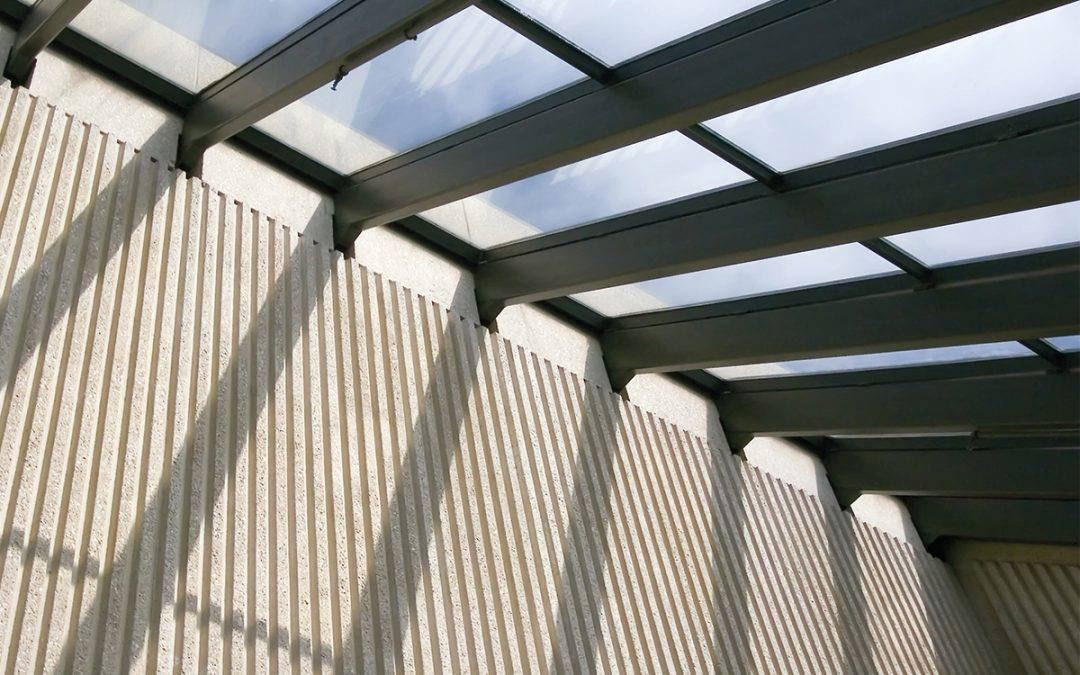
When plastic sheeting is destined for an outdoor application, the material itself is only half the story. What really determines how well it performs over time is how well it’s been protected against ultraviolet (UV) radiation. Whether it’s cladding a canopy, glazing a greenhouse, or forming part of a street furniture installation, plastics exposed to direct sunlight face a very different set of challenges than those used indoors, and getting UV protection wrong can be a costly mistake.
What UV Exposure Actually Does to Plastic
Sunlight doesn’t just fade colours. Prolonged UV exposure breaks down the molecular structure of many plastics, a process known as photodegradation. Over time, this can cause sheets to become brittle, discoloured, or prone to cracking. Clarity can dull, colours can yellow, and structural integrity can weaken, none of which is ideal for a material that’s meant to last for years in the elements.
The rate of degradation depends heavily on the base polymer. Untreated plastics can start showing visible signs of UV damage within a matter of months in strong sunlight, while UV-stabilised materials are engineered to resist this process for a decade or more
How UV Protection Works
Manufacturers typically build UV resistance into a sheet in one of two ways: through UV stabilisers mixed into the material during production, or via a dedicated UV-resistant coating or coextruded layer applied to the surface. Acrylic, for example, has naturally good UV resistance and is often chosen specifically for outdoor glazing and signage because of it. Polycarbonate, while incredibly strong and impact-resistant, generally needs a UV-protective coating to prevent yellowing and surface degradation over time.
This is why it’s worth checking exactly what you’re buying. Two sheets that look identical on the shelf can have very different lifespans outdoors, depending on whether, and how, they’ve been treated for UV resistance.
Why It Matters for Your Project
For any outdoor application, from bus shelters and signage to greenhouse panels and protective screens, UV protection isn’t a nice-to-have — it’s central to the product’s long-term value. Specifying a UV-stable material means:
- Longer service life – less frequent replacement, lower whole-life cost
- Consistent appearance – no unexpected yellowing or clouding that undermines signage or branding
- Retained strength – reduced risk of cracking or brittleness in structural or protective applications
- Better return on investment – premium UV-stabilised sheets often cost more upfront but avoid expensive early replacement
Skimping on UV protection to save money at the point of purchase can easily backfire, especially for projects where the plastic is highly visible or structurally important.
Getting the Right Material for Outdoor Use
Not every plastic sheet is created equal when it comes to standing up to the sun. The right choice depends on the application, the expected exposure, and how long you need the material to perform. Getting expert advice at the sourcing stage, rather than after installation, is the easiest way to avoid problems down the line.
If you’re specifying plastic sheeting for an outdoor project, our team can help you choose a material with the right level of UV protection for your needs, backed by decades of experience across street furniture, signage, and construction applications.